
Eating Patterns
How the Weekly Plate Shapes Weight Patterns Over Time
Eleanor Marsden ·
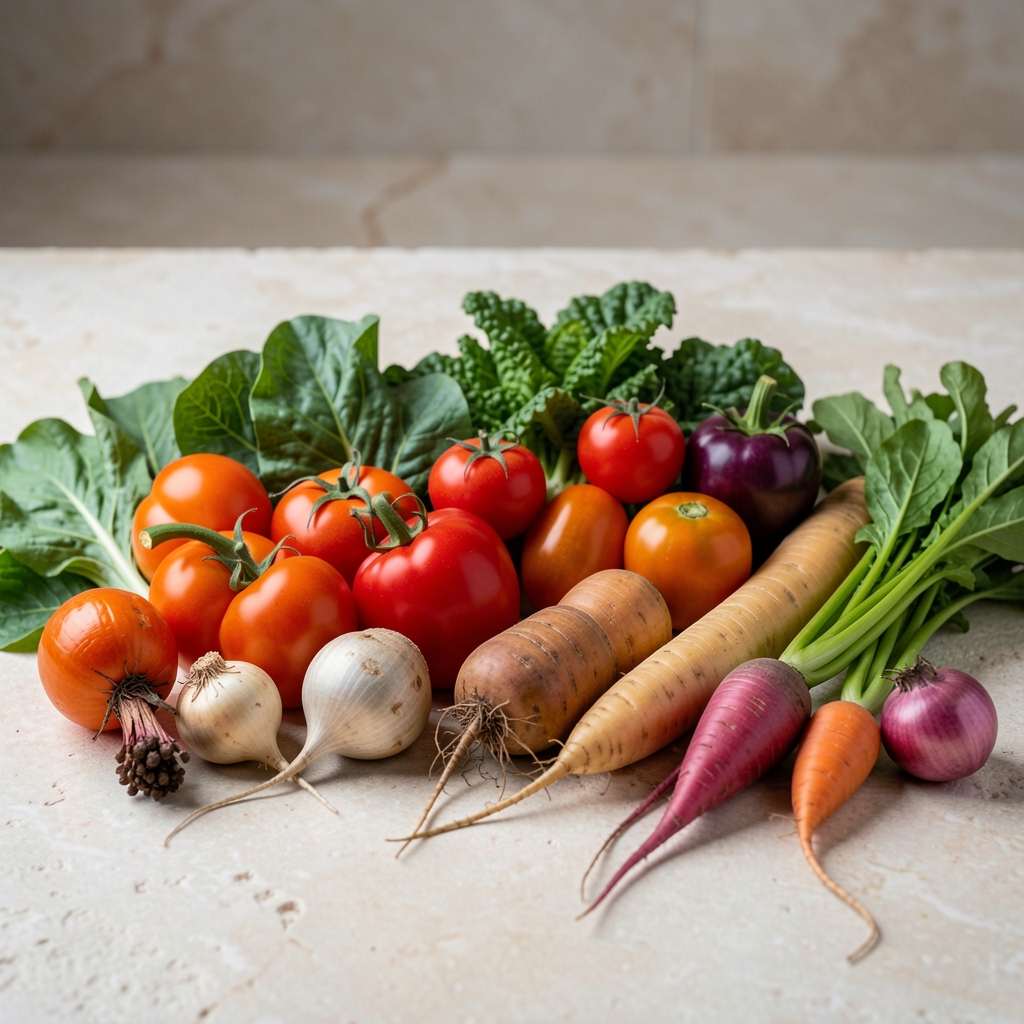
February in London carries a particular quality of produce. The last winter root vegetables appear alongside the earliest spring offerings — purple sprouting broccoli on the market stalls alongside the season's remaining parsnips. A nutritionist's weekly record from this month reveals how the arrival and departure of specific vegetables reshapes the plate, and with it, the nutritional character of the week.
Seasonal produce availability is not merely a question of variety for its own sake. It is a practical nutritional variable. When the week's food record is shaped by what is genuinely in season — purchased fresh, at reasonable cost, from local markets or well-stocked greengrocers — the nutritional composition of meals tends to shift in ways that serve the body's requirements for that period.
Winter produce — root vegetables, brassicas, stored apples, hearty legumes — offers a different nutritional profile from summer's softer offerings. The archive's observation of weekly records across twelve months reveals that those who eat with an eye on the season tend to consume a wider variety of vegetables over the year, even if any given week's selection appears more limited than what is available year-round from large supermarkets.
This variety matters. Nutritional balance across the year benefits from the rotation of different vegetable families, different pigment groups, and different plant compounds. The seasonal calendar, observed loosely, performs this rotation naturally — a function that deliberate year-round planning would require considerable effort to replicate.
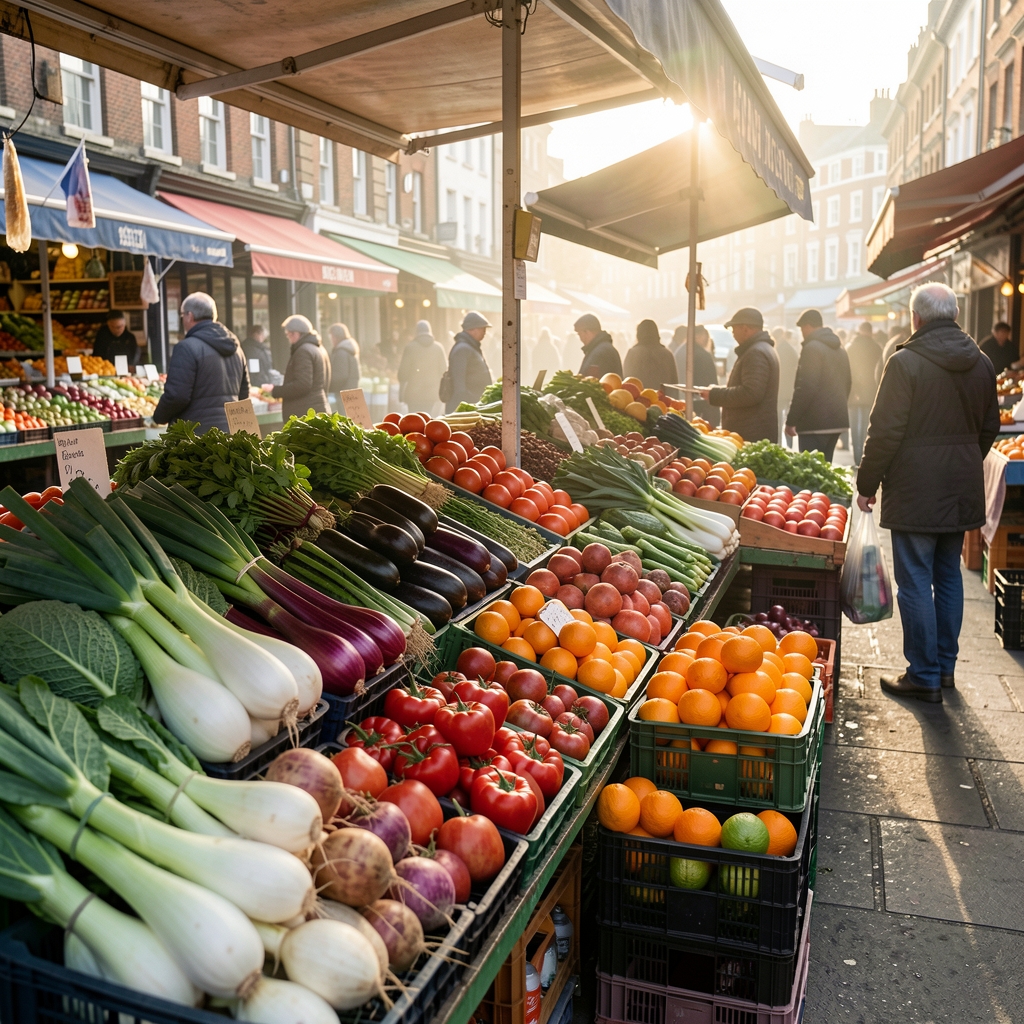
Fruit presents a slightly different observational pattern in the weekly record. While vegetables tend to be purchased and consumed close together, fruit — particularly during winter months — often sits on the kitchen surface for several days before use. The weekly record therefore reflects not just what was purchased, but what was actually consumed, and the gap between these two figures is itself an informative observation.
In winter, citrus fruits — oranges, clementines, blood oranges, grapefruit — constitute a significant proportion of the fresh fruit available at reasonable price and quality in London markets. The archive's records from January and February consistently show citrus as the dominant fruit consumed, with stored apples and pears appearing alongside. This concentration is not a nutritional deficiency; citrus offers considerable variety of plant compounds, and the fibre content of whole citrus fruit supports a sense of fullness between meals.
The arrival of spring produce in March and April — early strawberries from southern Europe, forced rhubarb, the beginnings of the soft fruit season — introduces a noticeable shift in the weekly record. Fruit consumption tends to increase as the range and appeal of available produce broadens. This increase in fruit variety tends to coincide, in the archive's observations, with a natural increase in nutritional variety across the week as a whole.
"The seasonal calendar, observed loosely, performs nutritional rotation naturally."
Amaroven Field Notes — Archive Observation, February 2026
Among the most consistent observations in the archive's weekly records is the nutritional significance of the market visit — whether to a farmers' market, a street market, or simply the fresh produce section of a well-supplied shop. The visit functions as a weekly anchor for the food rhythm: a moment of engagement with what is available, fresh, and in season that shapes subsequent meal decisions.
Records kept by those who shop for fresh produce once or twice a week show consistently higher vegetable variety in their weekly food records than those who shop less frequently or rely primarily on delivery services. This is not an argument against convenience — it is an observation about how physical engagement with fresh produce tends to translate into more varied and considered purchasing.
The market visit also functions as a form of seasonal awareness. When purple sprouting broccoli appears on the stall, its presence signals something about the month, about what the land is producing, about how the plate might be arranged for the coming week. This form of awareness — quiet, habitual, observational — sits at the heart of a sustainable approach to nutrition.
The relationship between seasonal produce and plant-based meals is particularly evident in the archive's winter and spring records. When the selection of fresh vegetables is more limited — as it genuinely is during the darkest months of the English winter — plant-based meals tend to rely more heavily on stored and preserved produce: dried legumes, tinned tomatoes, whole grains, root vegetables roasted or simmered in broth.
These meals are not less nutritionally valuable for their simplicity. A week built around lentil soups, roasted root vegetables with whole grains, and brassica-based stews offers a solid nutritional foundation — fibre supporting satiety, plant protein contributing to a sense of fullness, complex carbohydrates providing sustained energy across the working day.
As spring progresses and the fresh vegetable calendar expands, plant-based meals in the archive's records naturally diversify: salads reappear, raw preparations become more frequent, lighter grain dishes replace the heavier winter bases. The seasonal rhythm, in this reading, is itself a nutritional strategy — not a prescribed one, but an emergent one, shaped by the land's own timetable.
Those who eat with an eye on the season tend to consume a wider variety of vegetables over the year, even if individual weeks appear more limited than year-round availability might suggest.
The weekly market visit functions as a nutritional anchor — a moment of engagement with fresh, seasonal produce that shapes subsequent food choices across the week.
Winter plant-based meals built around stored produce — legumes, root vegetables, whole grains — offer a solid nutritional foundation without requiring access to out-of-season fresh produce.
The seasonal calendar, loosely followed, naturally rotates different vegetable families and nutritional profiles across the year — a function that benefits long-term nutritional balance.